
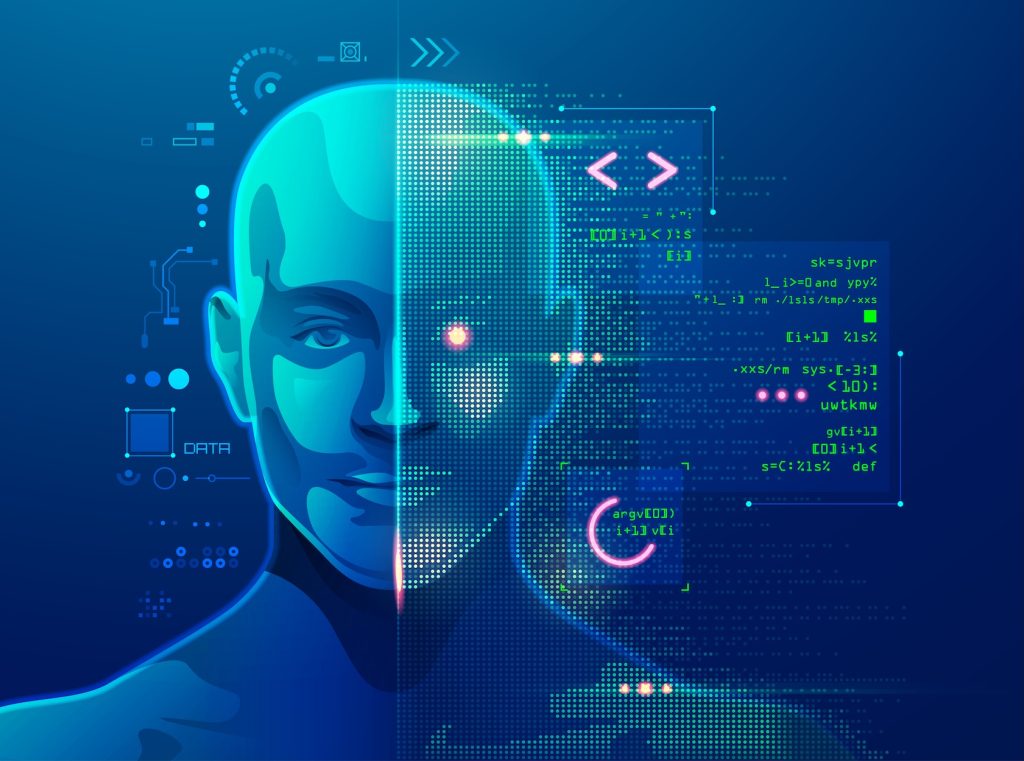
As software systems grow more complex and release cycles accelerate, Quality Assurance (QA) is undergoing a significant transformation. Artificial Intelligence (AI) is not replacing human testers—it is redefining how quality is achieved. The future lies in a collaborative model where human intelligence and artificial intelligence work together, combining their strengths to deliver faster, smarter, and more reliable outcomes.
🔄 The Shift in QA Paradigm
Traditional QA relied on manual testing and rule-based automation. While effective, these approaches struggle to keep pace with dynamic applications and continuous delivery models.
AI introduces capabilities such as pattern recognition, predictive analytics, and self-learning systems. However, it lacks contextual understanding and human judgment.
This has led to a hybrid QA model, where human expertise and AI capabilities complement each other.
🧠 Strengths of Human Intelligence
Human testers bring critical capabilities:
- Critical Thinking: Identifying complex risks and edge cases
- Domain Knowledge: Understanding business context and user expectations
- Exploratory Testing: Discovering issues beyond predefined scenarios
- Ethical Judgment: Evaluating usability, fairness, and real-world impact
These strengths ensure software is meaningful, usable, and aligned with user needs.
🤖 Strengths of Artificial Intelligence
AI enhances QA by optimizing repetitive and data-intensive tasks:
- Automated Test Generation: Creating scenarios based on patterns
- Self-Healing Automation: Adapting to UI and code changes
- Predictive Analytics: Identifying high-risk areas
- High-Speed Execution: Running large-scale tests efficiently
AI improves speed, scalability, and consistency in testing processes.
🤝 The Power of Collaboration
The real advantage comes from combining both:
- AI handles speed and scale
- Humans provide context and judgment
For example:
- AI identifies risk areas, humans perform deep exploratory testing
- Automation executes regression tests, humans validate user experience
- AI analyses data, humans interpret insights
This synergy leads to higher quality outcomes with improved efficiency.
📊 Key Elements of the New QA Model
- Human-AI Collaboration: Integrate AI tools with human oversight
- Data-Driven Testing: Use insights to prioritize testing efforts
- Continuous Testing: Embed QA into CI/CD pipelines
- Skill Evolution: Equip QA professionals with AI and analytical skills
⚠️ Challenges to Address
Organizations may face:
- Over-reliance on AI without validation
- Limited transparency in AI decisions
- Skill gaps within QA teams
- Integration with existing processes
Addressing these requires balanced adoption, training, and governance.
📈 Business Impact
The Human + AI QA model delivers:
- Improved efficiency and test coverage
- Faster release cycles
- Reduced defect leakage
- Enhanced user satisfaction
- Greater confidence in product quality
🎯 Conclusion
The future of QA is not about choosing between humans and AI—it is about leveraging both effectively. Human intelligence brings creativity, context, and judgment, while artificial intelligence offers speed, scalability, and precision. Together, they form a powerful QA model suited for modern software development. Organizations that embrace this collaborative approach will be better positioned to deliver high-quality, reliable, and intelligent solutions.


