
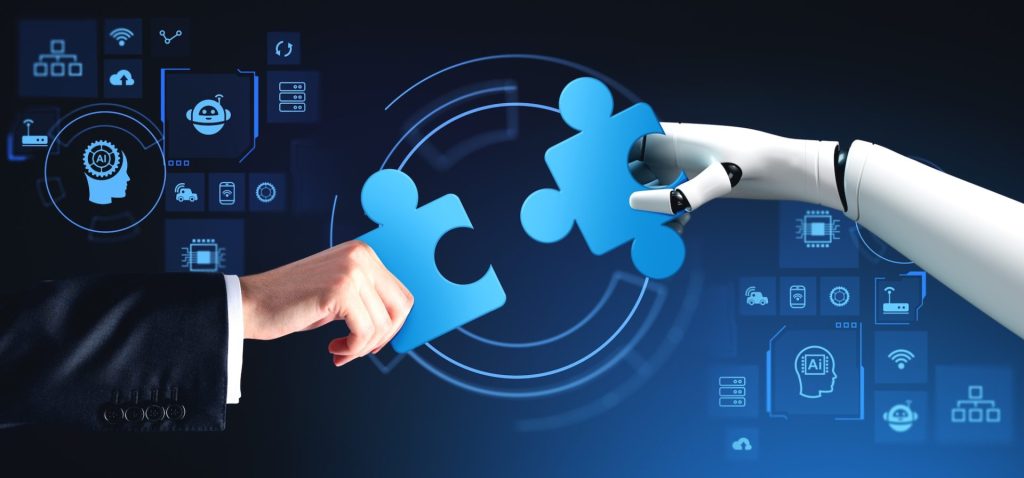
The quiet shift
AI no longer feels like just another piece of software.
It learns, adapts, recalls context, and improves with use. It doesn’t simply react, it actively contributes. What used to be a simple interaction is now evolving into collaboration.
Beyond commands
In the past, software depended entirely on instructions.
Today, AI can predict needs, suggest approaches, and complete tasks with very little input.
It no longer acts like something you operate. It starts to feel like something that works alongside you.
The new work dynamic
You set the objective. AI structures the steps. AI handles portions of the execution. You review, guide, and refine. This is no longer basic support. It’s a shared effort toward a common outcome.
Redefining contribution
As AI becomes more involved, new questions emerge:
Who truly owns the output? Who takes responsibility when something goes wrong? Who deserves credit when things go right?
These are practical concerns, not abstract ideas anymore.
The changing skill set
The nature of value is evolving.
It’s no longer just about writing code – it’s about directing intelligence. Not just solving problems – but defining them clearly.
Working effectively with AI now requires:
- clear intent
- strong judgment
- structured thinking
The subtle risk
As AI becomes more dependable, human engagement can decline.
We start accepting answers quickly. We question less. We rely more on than we realize.
What begins as collaboration can slowly turn into dependency.
Closing perspective
AI is doing more than boosting efficiency.
It is reshaping how work itself is done.
The real question is not whether AI will act like a colleague.
It’s whether you will continue to think, question, and contribute actively in that partnership.


